
WHAT WE EAT EVERY DAY BUILDS US EVERY DAY
What we consume every day becomes part of the structures that build, protect and keep the bodyfunctioning.
SAVØR works exclusively with extra virgin olive oil because it preserves the natural qualities of
the fruit without the need for refining.

Some oils come from a fruit. Others from a seed.

Not all oils are extracted or processed in the same way.

The process determines what the oil retains.
The way an oil is extracted and processed determines its composition, stability and characteristics.
Olives naturally contain oil, and extra virgin olive oil is obtained directly from the fruit through mechanical processes.
The refined seed oils commonly found on the market follow a different path, involving several stages ofextraction and refining.
Not all oils begin their journey in the same way.
Extra virgin olive oil comes directly from a fruit: the olive. The fruit naturally contains oil. To obtain it, the olives are crushed and the oil is separated using exclusively mechanical processes, without the use of solvents and without the need for subsequent refining.
Refined seed oils follow a different path.
Seeds such as sunflower, rapeseed, soybean and corn also contain oil, but extracting and preparing it generally requires a greater degree of industrial processing. Depending on the raw material and the production method, the oil may be obtained through mechanical pressing, solvent extraction, or a combination of both. It is then typically refined to adjust characteristics such as acidity, colour, odour and flavour.
The difference lies in more than just the source.
It lies in everything the oil needs—or doesn’t need—before it reaches the table.
The journey is part of the food itself.

VS


Refined seed oils go through different stages of extraction and refining before reaching the market.
Refined seed oils intended for food use generally undergo several stages of extraction and refining before reaching the market.
The exact process depends on the raw material and the manufacturer, but it typically includes the following steps.
1. Extraction
The seeds are cleaned, conditioned and crushed to release the oil they contain.
In many industrial processes, extraction is completed using a solvent—typically hexane—which allows a greater proportion of the oil to be recovered. The solvent is then removed before the refining process continues.
2. Neutralisation
Free fatty acids and other compounds that may affect the oil’s stability or sensory characteristics are reduced.
3. Bleaching
The oil is treated with adsorbent materials that remove pigments and other compounds present in the crude oil, resulting in a more uniform appearance
4. Deodorisation
Finally, the oil is exposed to steam, vacuum and high temperatures to remove odours and flavours naturally present in the raw material.
The result is a stable, uniform and sensorially neutral oil, although this process also alters part of its original composition.
Extra virgin olive oil follows a different path.
Its quality does not depend on correcting the oil afterwards, but on preserving the natural qualities of the fruit from the very beginning.
Not all oils need to become something else before they can be consumed.

In many processes, a solvent is used to extract a greater proportion of the oil.

Reduces free fatty acids and other compounds present in the crude oil.
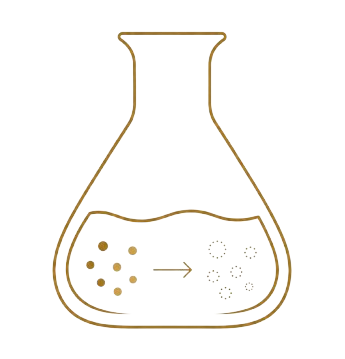
Removes pigments and other compounds using adsorbent materials.

Uses steam, vacuum and high temperatures to remove odours and flavours.
The result is an oil that is almost neutral in colour, smell and taste.
An industrially processed edible fat.
Far removed from the raw material it started with.
Fat is far more than a source of energy.
Fats (lipids) form part of the membranes surrounding every cell and contribute to their structure and function.
The composition of these membranes affects essential properties such as stability and flexibility. It alsoinfluences how cells exchange substances and communicate with their surroundings.
Fat is far more than a source of energy
Fats (lipids) form part of the membranes surrounding every cell and contribute to their structure,flexibility and function. They also play a role in many processes involved in transport andcommunication between cells.
The composition of these membranes depends on the overall diet, metabolism and many otherindividual factors.
That is why the quality of the fat we regularly consume matters.
Not all fats have the same resistance to oxidation.
Because of their chemical structure, polyunsaturated fatty acids are more susceptible to oxidation thanmonounsaturated fatty acids. Both have a place in a balanced diet, but they behave differently.
Extra virgin olive oil is characterised by its high content of oleic acid, a monounsaturated fatty acid, andby retaining natural compounds from the olive, including vitamin E and other antioxidants. Their levelsvary depending on the variety, harvest and production process.
This composition helps explain the oil’s high stability and its suitability for everyday use — both raw andacross a wide range of cooking methods.
What we choose every day is not a detail. It is a conscious choice.

Cell membranes need to maintain their structure in order to function and adapt to their environment

Extra virgin olive oil is rich in monounsaturated fats, which are more resistant to oxidation — in otherwords, less prone to breaking down.
This greater stability means the fat is less likely to degrade over time or when exposed to air and heat.
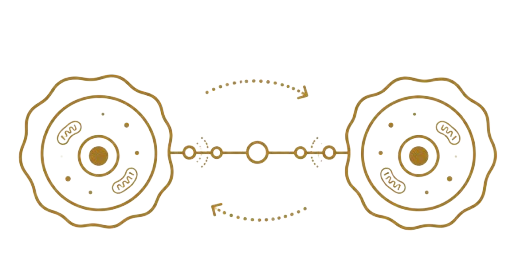
Cell membranes exchange substances and take part in signalling processes that allow cells tocommunicate and respond to their environment.
Extra virgin olive oil has a high content of oleic acid — a monounsaturated fat with good oxidative stability — while also retaining natural compounds from the olive.
Refining produces an oil that is uniform and stable for industrial production.
At the same time, it alters part of the characteristics present in the crude oil
During refining, the following components may be reduced, among others:
• Natural pigments responsible for colour.
• Aromatic compounds that contribute to flavour and aroma.
• Part of the vitamin E and other heat-sensitive components.
• Certain antioxidants and other minor compounds naturally present in the oil.
The result is an oil that is more neutral from a sensory perspective and more uniform for commercial
distribution.
Extra virgin olive oil follows a different philosophy.
It must achieve its category from the very moment it is obtained. Its quality is not created afterwards
through correction, but must already be present at the source, thanks to the quality of the fruit and an
exclusively mechanical extraction process.
For this reason, it retains its colour, aroma, flavour and a significant part of the natural compounds
characteristic of the olive.
Quality begins when an oil does not need to be corrected.
Oil is part of the food we eat every day.
We use it for cooking and dressing food, and it is also present in many of the foods we consume.
That is why it matters not only which oil we choose, but also how it has been made.
It is not a one-off decision. It is a choice we repeat over many years.
Natural olive juice, obtained directly from the fruit and exclusively through mechanical processe.
No sensory defects.
Retains its aroma, flavour and a significant proportion of the natural compounds found in the olive.
The highest quality category.

It is also olive juice obtained exclusively through mechanical processes , but it presents sensorydefects identified through professional tasting.
Its sensory quality is lower than that of extra virgin olive oil.

Made by blending refined olive oil — obtained by refining virgin olive oils — with virgin olive oil suitable for consumption. An edible oil, but no longer the natural expression of the fruit.

SAVØR works exclusively with extra virgin olive oil.